

A Step-by-Step Guide Ready to monetize your expertise? This guide walks you through setting up an online course storefront using an LMS platform and e-commerce tools. From pricing your course to integrating with WooCommerce and marketing your offering, learn the keys to building a successful course business.
Selling online courses has become one of the most effective ways to share knowledge and build a scalable business. Whether you are a consultant, trainer, company, or organization, digital learning allows you to reach learners anywhere while generating recurring revenue.
However, creating a course is only the first step. To build a successful course business, you also need the right platform, pricing strategy, and marketing approach.
In this guide, we walk through the key steps to launching and selling your online courses successfully.
1. Identify your audience and learning goals
Before building your course, it is important to understand who your learners are and what problem your course will solve.
Ask yourself questions such as:
- Who is the course for
- What skills or knowledge will learners gain
- What problem are you helping them solve
Clear learning goals make it easier to structure your course and communicate its value to potential customers.
2. Create a structured and valuable course
Once you know your audience, the next step is to build the course itself.
Successful online courses usually include a clear structure with modules, lessons, and practical examples. Try to keep lessons focused and easy to follow. Multimedia elements such as video, images, and quizzes can make the course more engaging.
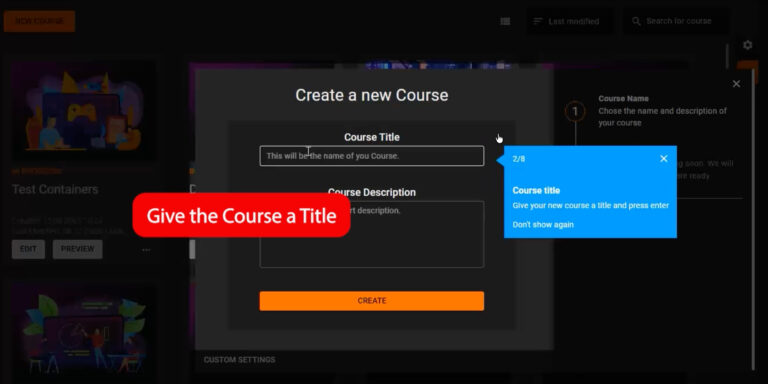
Using a course authoring tool like MentorKit Course Creator makes it easier to organize content, create interactive pages, and export your course to different learning platforms.
3. Choose the right platform to deliver your courses
To sell courses online, you need a platform that allows you to host and distribute your learning content.
An LMS platform helps you manage learners, track course progress, and provide certificates or documentation. Many course creators also choose solutions that integrate with websites and e commerce systems.
For example, a WordPress based LMS combined with WooCommerce allows you to sell courses directly from your own website.
4. Set your pricing strategy
Pricing an online course can be challenging. The right price depends on factors such as the depth of the content, the target audience, and the value the course provides.
Some common pricing models include:
- one time payment for course access
- subscription based learning
- bundled courses or training programs
- corporate licensing for companies
It can be helpful to start with a clear value proposition and compare similar courses in your market.
5. Build your course storefront
To start selling courses, you need a simple and professional storefront where learners can browse, purchase, and access the training.
Platforms like WooCommerce make it easy to create a course shop where users can:
- purchase courses online
- receive automatic access after payment
- use discount codes or bundles
- access their training directly through your LMS
This approach gives you full control over pricing, branding, and customer relationships.
6. Promote your courses
Even the best course will not sell if people do not know it exists. Marketing is therefore an essential part of building a successful course business.
Some effective promotion strategies include:
- sharing educational content on social media
- writing blog articles related to your course topic
- offering free webinars or sample lessons
- building an email list
- partnering with organizations or industry groups
Over time, consistent marketing helps build credibility and trust in your expertise.
Final thoughts
Selling courses online is not only about creating content. It is about building a system that allows you to create, deliver, and sell knowledge efficiently.
With the right combination of course creation tools, an LMS platform, and e commerce integration, you can build a sustainable learning business that grows over time.
Solutions like MentorKit Course Creator together with WordPress and WooCommerce make it possible to maintain full control over your platform, your content, and your revenue while reaching learners across the world.
Other Tips and Tricks
-
MentorKit LMS Pro vs Thinkific: Which Platform Is Better for Professional Online Learning?
The right online learning platform depends on how much flexibility you need, how you plan to manage learning content, and whether your focus is simple course sales or scalable training operations. Both Thinkific and MentorKit Pro support online learning and digital course delivery, but they are designed for very different types of learning environments.
-
LearnDash vs MentorKit LMS Pro: Which LMS Is the Better Fit for Modern WordPress Learning?
Choosing the right WordPress LMS depends on how you want to create learning content, manage learners, and scale your training environment over time. Both LearnDash and MentorKit Pro support online courses, ecommerce, and learner management, but they are built around very different workflows.
-
The art of digital learning: How to build an engaging online course from scratch
Creating an online course doesn’t have to feel like assembling a 5,000-piece puzzle in the dark. Whether you are training employees on “New Safety Protocols” or teaching a masterclass on “Digital Marketing,” the secret lies in a structured workflow.
-
5 Tips to create engaging online courses
5 Tips to Create Engaging Online Courses Make your digital training stand out! Learn how to use multimedia, interactivity, and storytelling to design courses that captivate learners from start to finish. We share practical techniques (tested in MentorKit Creator) to boost engagement and knowledge retention.


 English
  Norwegian
  Danish
  Swedish